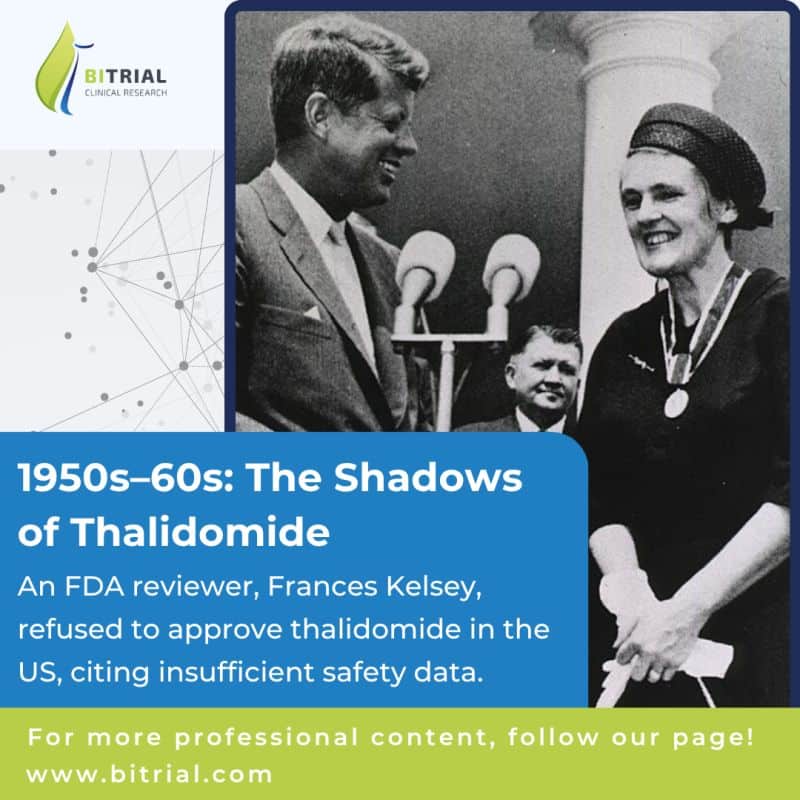
Our journey through the milestones of clinical research continues with the 1950s–60s: The shadows of thalidomide 💊
One of the most defining—and tragic—chapters in clinical research history is linked to the thalidomide disaster, a turning point that reshaped how we think about drug safety, regulation, and vulnerable populations.
Originally introduced in the late 1950s as a sedative and treatment for morning sickness, thalidomide was widely prescribed to pregnant women across 46 countries—without being adequately tested in pregnancy. The consequences were devastating: more than 10,000 children were born with severe congenital deformities, alongside thousands of miscarriages.
Amid this global crisis, one name stands out: Frances Kelsey. As an FDA reviewer, she refused to approve thalidomide in the United States, citing insufficient safety data. Her vigilance prevented a public health catastrophe and helped establish the FDA’s role as a global benchmark for drug safety and regulation. 🌍🔬
💡 The story of thalidomide highlights not only the importance of strict safety standards and regulatory oversight, but also the risks of incomplete or inadequate research. This case is a powerful reminder that clinical research must be conducted with the highest level of scientific rigor, responsibility, and ethical consideration.
At BiTrial, we believe that well-designed, carefully executed clinical trials are essential to advancing medicine safely and responsibly. 🤝
