Every December, the British Medical Journal unwraps a special gift for its readers: a collection of unconventional yet scientifically rigorous studies that blend curiosity, creativity, and a touch of holiday humor.
This year, we’ve selected two standout studies from the BMJ Christmas edition that are guaranteed to spark curiosity, challenge assumptions, and add a little scientific sparkle to the holiday season ✨
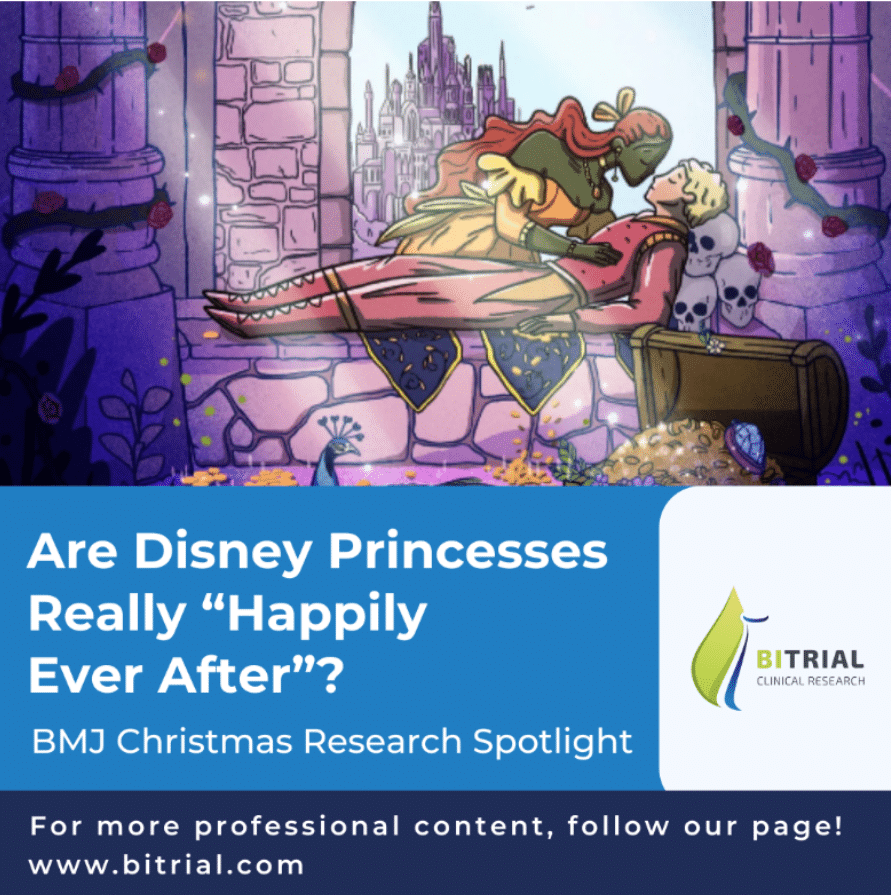
👸 #1: Are Disney Princesses Really “Happily Ever After”?
BMJs study takes a closer look at the hidden health risks faced by Disney princesses themselves — not the unrealistic expectations they set for viewers, but the real-world medical hazards lurking in their fairytales.
From Snow White’s social isolation and poisoned apple, through Jasmine’s loneliness and zoonotic risks from her pet tiger, to Cinderella’s occupational lung disease from constant dust exposure, the authors highlight how many beloved princesses face serious physical and mental health threats — despite their happy endings.
The conclusion? Disney princesses might benefit more from preventive healthcare, mental health support, and occupational safety measures than from true love’s kiss alone.
👉 Read the full study on BMJ:
🔗 https://lnkd.in/eSn6Vsxk
⏳ #2: How “recent” is… recent?
Ever wondered what “recent studies suggest” actually means? A playful BMJ analysis decided to find out — and the results are eye-opening.
Researchers examined 1,000 biomedical articles where the word “recent” was directly linked to a citation. The findings show that “recent” can mean anything from brand new to nearly four decades old. While the most common citation lag was one year, almost 18% of “recent” references were at least 10 years old, and some stretched back 37 years.
The definition of “recent” also varied by specialty: fast-moving fields like critical care and infectious diseases cited fresher evidence, while areas such as nephrology and dentistry were far more… flexible with time. High-impact journals tended to cite more up-to-date research — reassuring, at least.
🔍 The takeaway?
“Recent” is often more of a feeling than a timestamp. Readers (and reviewers) should take claims of recency with a healthy dose of chronological skepticism.
👉 Read the full study on BMJ:
🔗https://lnkd.in/g7mq9NTa